

When the Prescription Is a Passport: Sweden’s Bold Experiment in Travel-for-Health
- goldenbridgetravel2
- Oct 18, 2025
- 5 min read
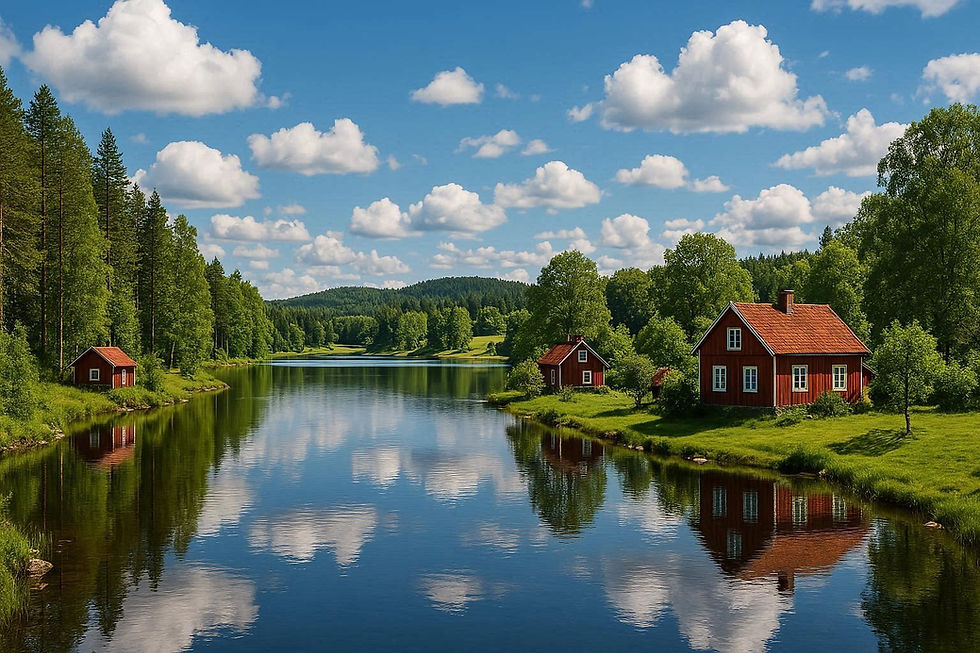
In a move that sounds part wellness retreat, part marketing campaign and part public-health experiment, Sweden is the first country in the world to launch what amounts to a doctor-prescribed travel experience. Under what’s being called “The Swedish Prescription”, doctors are invited to recommend a trip to Sweden as part of a health plan — not as replacement for medicines or surgeries, but as a complementary intervention for wellbeing. PR Newswire+2euronews+2
What does that mean in practice? Think: forest bathing, open-water swimming, sauna/cold-plunge therapy, “fika” breaks (a Swedish culture of coffee + social pause), and other nature/culture/lifestyle experiences that are backed by emerging research in mental and physical health. euronews+1
Let’s unpack this: what is happening, why it matters, and what questions it raises.
What is this initiative?
How it works
The country’s tourism board (Visit Sweden) created a downloadable referral/prescription document that a person can take to their doctor. The European Magazine+1
The prescription identifies a set of recommended experiences in Sweden — e.g., walking in woodland, sauna + cold plunge in the archipelago, immersive cultural or social experiences. euronews
Doctors are encouraged to use this as a tool in holistic wellbeing: for patients suffering from stress, sleeplessness, maybe mild mental-health burdens, perhaps sedentary lifestyles. The idea is to “prescribe” travel (to Sweden) as one component of treatment. Onlymyhealth
Worth noting: This is not a scheme that pays for your trip. The patient incurs the travel cost. The “prescription” is more about framing, recognition, and motivation. The Times of India+1
Why Sweden?
Sweden already scores highly on quality of life, access to green space, etc. It’s a natural fit for a nature-/wellness-based proposition. The European Magazine+1
The country’s “right to roam” (allemansrätten), thousands of lakes and forests, and cultural routines like the fika make it uniquely positioned to promote “time off nature + social pause”. The European Magazine+1
The tourism board frames this as innovation: moving beyond traditional tourism marketing to “travel as medicine”. PR Newswire
Why this matters (and what the potential benefits are)
Health & wellbeing implications
There is growing evidence that time in nature, exposure to green/blue spaces, social connection and movement all contribute to improved mental health (reduced stress, better mood), improved sleep, better cardiovascular markers, etc. The Swedish campaign cites such research. euronews+1
In an era of increasing lifestyle-related health burdens (sedentary lives, digital overload, stress, poor sleep), non-pharmaceutical interventions (nature, culture, social pause) are gaining traction in medicine.
By formalizing a “travel prescription”, Sweden may help destigmatize non-drug, non-clinical therapies and encourage a systemic shift in how health, lifestyle and wellbeing are integrated.
Tourism & economy
From a tourism perspective, this is incredibly creative. Instead of just “come visit Sweden because it’s beautiful”, the message is “come visit Sweden because it benefits your health”.
It may also attract a niche of wellness-travellers, medical-tourism adjacent, that want a more meaningful, restorative holiday rather than pure leisure.
Culture & policy innovation
It signals a blending of public health, lifestyle medicine, and national policy: the idea that health doesn’t just happen in clinics, but in forests, lakes, social rituals, culture.
Doctors prescribing experiences challenges the standard model of prescriptions = pills. It may help shift mindsets about what “treatment” can be.
Some caveats & questions
Not a covered expense: Although it’s framed as a prescription, it’s still up to the individual to pay. It is not a state-funded treatment for free travel. The Times of India
Clinical scope: This is not suitable for serious medical conditions requiring surgery, medication, intensive therapy. The campaign clearly frames it as preventive / wellbeing-support. euronews
Doctor buy-in: Will doctors actually prescribe travel? What training or protocols will they have to determine which patients are appropriate?
Equity issues: If travel is costly, the benefits may be limited to those who can afford the trip.
Evidence vs hype: While there is research on nature/social prescriptions, the leap to “going abroad to Sweden” is bold. One must ask: how strong is the evidence that a trip internationally gives measurable benefit vs local nature/time off?
Sustainability & expectations: If thousands decide to travel for health, what is the environmental cost? How are local communities impacted?
Health-system integration: Will this be integrated into standard primary-care practice, or remain a quirky campaign? How will outcomes be tracked?
What kinds of “prescribed” experiences are on offer?
Here are some examples highlighted in the campaign:
Forest walks in Swedish woodland, wild swimming or cold-water plunges in lakes or the archipelago – boosting circulation, resetting the nervous system. The European Magazine
Sauna sessions (for example, in Lapland), which research links to better sleep, lower risk of neurodegenerative disease. euronews
Culture/lifestyle interventions: taking a genuine “fika” break (coffee + cake + social interaction) as a moment of pause and social connection. euronews
Active outdoor living (“friluftsliv” – open-air life) in fresh cool air, nature immersion, less noise pollution, clearer mind. The News International
What this might mean for you
If you’re a reader thinking, “Could I get travel prescribed?” here are some points:
If you are experiencing stress, poor sleep, low mood, a sedentary lifestyle, or maybe mild health issues that might benefit from a lifestyle intervention, you could bring this idea to your doctor: “I saw this campaign about prescribing travel for wellbeing in Sweden. Couldand we discuss whether a trip could fit into my plan?”
You’d need to consider cost, travel time, what happens when you return — the trip is a tool, not a cure-all.
Ideally, you’d set goals: e.g., improve sleep by x%, reduce stress markers, reconnect socially, spend certain hours each day outdoors. Combine the trip with a follow-up back home.
Check practicalities: visa/travel, travel insurance, what kind of activities you will do, and and how you integrate the nature/time off into your daily life after returning.
If you are a health professional, this represents a potential new tool in your toolkit — non-clinical yet evidence-informed — but you’d need to assess its suitability, cost-benefit, and patient context.
Final thoughts
The Swedish Prescription is a bold, creative fusion of tourism, public health, and wellness culture. It’s less about “take this pill” and more about “go somewhere, do something, change your rhythm, breathe differently”. From a societal viewpoint, it reflects a shift: health is not only what happens in hospitals and pharmacies, but also in forests, lakes, social rituals, culture, and time off.
Whether this becomes a meaningful model that other countries replicate remains to be seen. But it opens the door to interesting questions: if travel, nature, and culture have measurable health benefits, how might we redesign our lives (locally and globally) to integrate those elements more routinely — without needing international flights? Could “wellness prescriptions” become as common as drug prescriptions for certain lifestyle-related conditions?
In short: yes, you might now get a “prescription” to go to Sweden. And yes, that’s worthy of a raised eyebrow — but perhaps also a moment of reflection on how we define health and what “treatment” can look like in the 21st century.


Comments